

“Purdah” is in the news as the Government tries to use it to avoid publishing its air-quality plans before the Election.
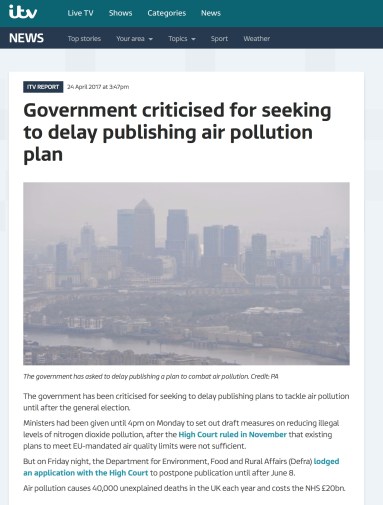 So what is “purdah”? Continue reading “Purdah ain’t what it used to be?”
“Purdah” is in the news as the Government tries to use it to avoid publishing its air-quality plans before the Election.
So what is “purdah”? Continue reading “Purdah ain’t what it used to be?”
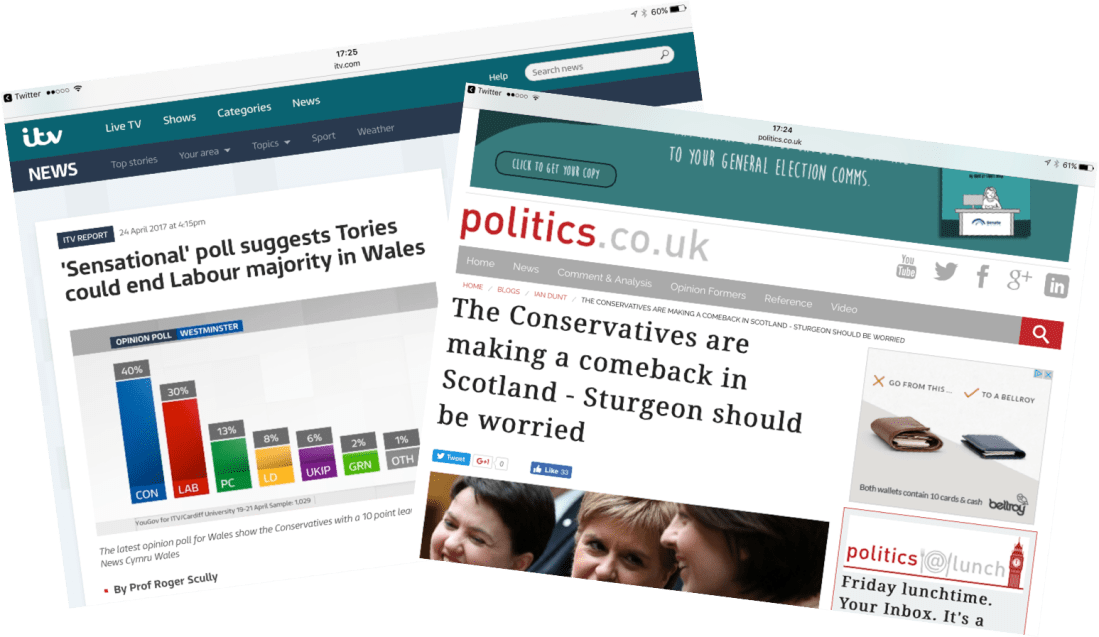
Never say never in politics. Not so long ago the Tories were virtually written off in Wales and Scotland. They were widely regarded as the English Conservative Party. But no more – in both Scotland and even more dramatically in Wales they seem on course to be firmly re-established, making the Party once again very much a national Party.
“Campaign in poetry, Govern in prose” is a phrase attributed to US Democrat politician Mario Cuomo.
Translated into more cynical language it means – campaign in lofty (but ill-defined) slogans and ‘big ideas’ but avoid putting too much detail into it – real life governing isn’t that simple.
Theresa May would almost certainly love to do exactly that. She is very good at ‘talking the talk’. Since winning the Tory leadership and becoming PM she has made lots of sweeping, but not well defined, commitments. Her instinct would almost certainly to try and do the same in her GE2017 Manifesto.
But she has a problem she ought to be considering. Manifesto’s matter – especially and paradoxically, I would argue for a government with a large majority. Continue reading “May’s Manifesto Dilemma – Campaign in Poetry or in Prose?”
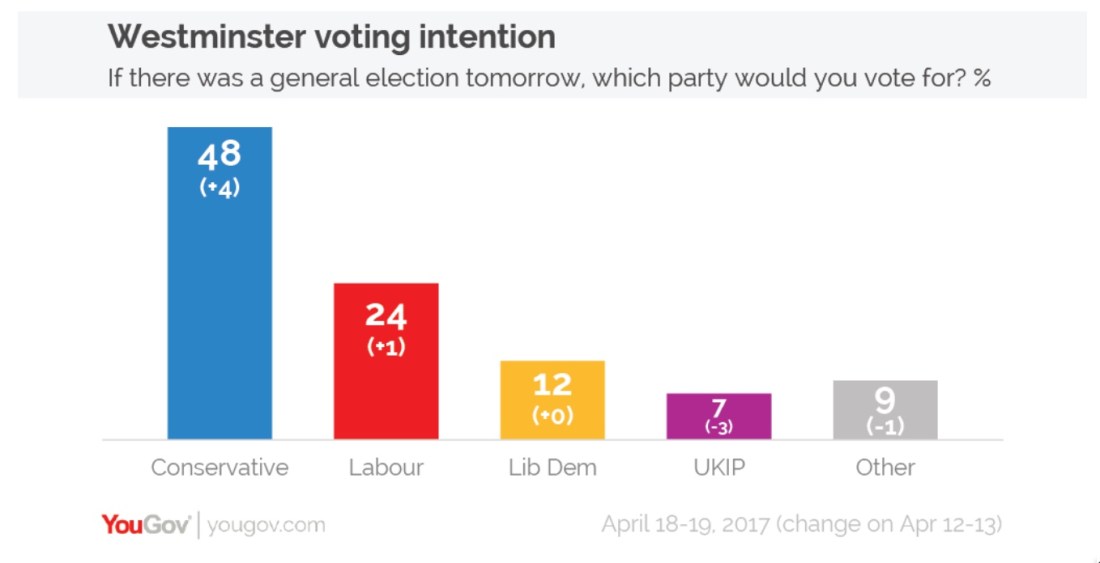
First, they are slipping in the polls. A YouGov poll has them at only 7%, a massive slippage from their previous double figures polling and triumphs like the 2014 European election results where the achieved 26.6% of the vote and 24 MEPs. At the last General Election in 2015 they managed nearly 13% of the national vote, 3.8m votes, but only won one seat.
Second, and probably of more symbolic importance, they are losing credibility. The only UKIP MP, Douglas Carswell, left the Party after having successfully defected from the Tories and defended his Clacton seat in a by-election in 2014, and again in 2015. But their new leader, Paul Nuttall, failed dramatically in Stoke in 2017, getting only a quarter of the vote in a seat seen as a prime UKIP target. More importantly the Party seemed riven by internal faction fighting after 2015 and the departure of Nigel Farage as leader.
(GE2017 Post No. 3)
In yesterday’s post I suggested that Jeremy Corbyn would not give up being Labour Leader – even after a crushing defeat – until his succession by another hard-left candidate was assured.
Let’s make two assumptions – Labour get badly defeated in GE2017 and Corbyn does go and is replaced by someone who can start Labour’s climb back. Big assumptions I know, but what would happen then?
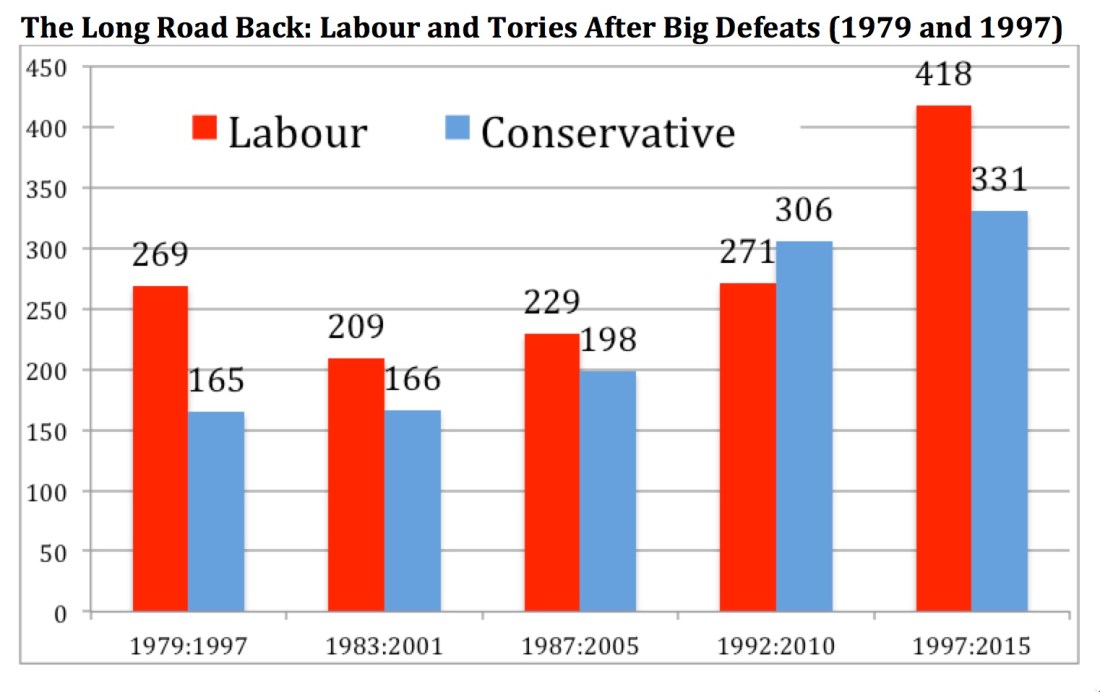
Well we have two examples of one of the major Parties suffering a big defeat followed by a – as it turns out very slow – recuperation: Labour in 1979 and the Tories in 1997.
I have compared the number of MPs gained by each Party in their initial big General Election defeat – Labour 1979 and Tories 1997 – and then at each subsequent election until they regained power. The results do not look pretty.
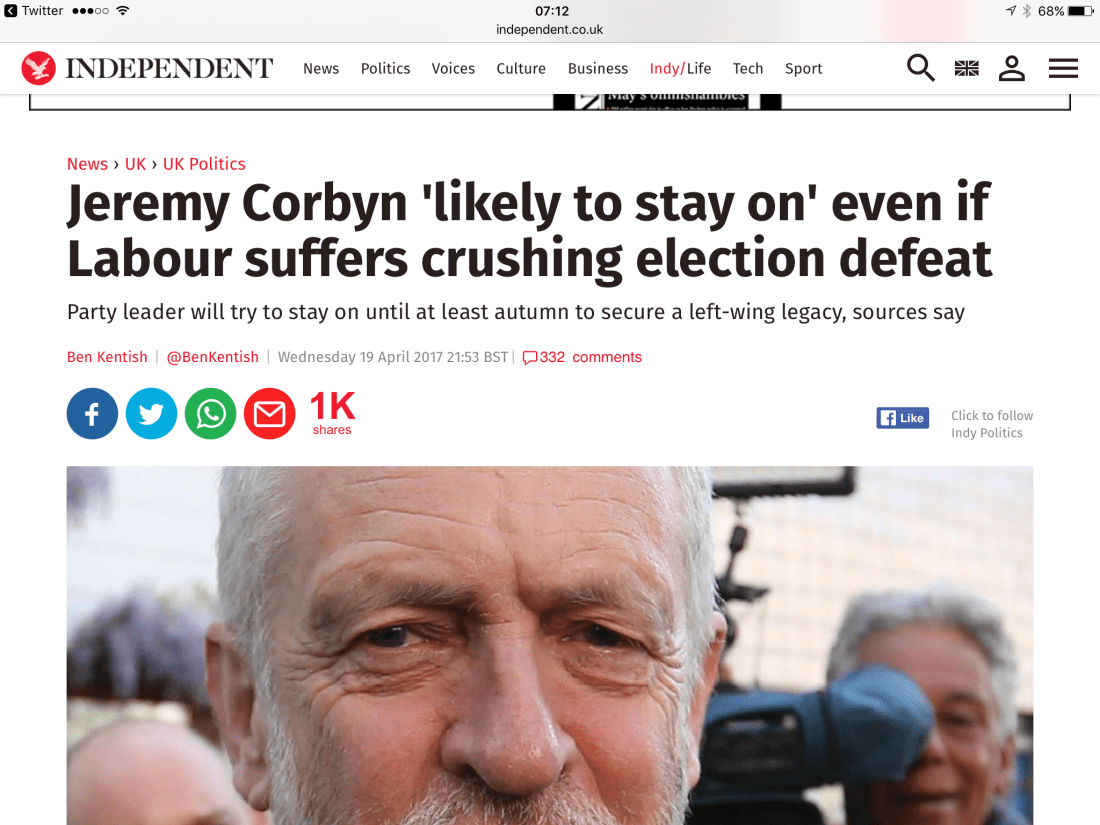
“Turkeys Voting for Christmas” was the taunt thrown at Labour MPs yesterday (Weds 19 April 2017) as they voted to call an early General Election.
Possibly, but the Christmas present most of them were voting for was the end of “the Corbyn problem”. Continue reading “Jeremy’s Last Stand? Don’t Bet On It, Not Yet”
Theresa May has called a general election in order to obtain a substantial Parliamentary (House of Commons) majority to support her policies on Brexit. She should be careful what she wishes for. Continue reading “Be careful what you wish for Mrs May: a big Tory majority in GE 2017 might not be the solution you think it is”
Paradoxes of Human Nature and Public Management Reform – Talbot 2005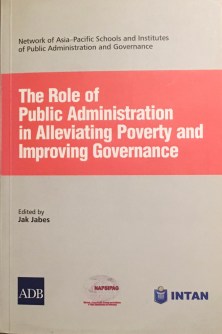
This is a book chapter based on a key note speech I gave at the launch conference of the Network of Asia-Pacific Schools and Institutes of Public Administration and Governance (NAPSIPAG) in Kuala Lumpur in December 2004.
It tries to draw a link between evolved human social nature and the contradictory tides of public management reform
It was published in this book which is sadly no longer available (although I have a PDF of the entire book if anyone wants it).
The model of human social instincts I use here, which was also used in my book “The Paradoxical Primate“, has since changed as I explain elsewhere on this blog .
 The Trump election has been as shocking and disorienting to mainstream opinion as the Brexit vote in the UK last year. Indeed, it is tempting to think there is no “mainstream” any more as the public appears divided into rightwing and leftwing populists and radicals.
One reaction to Trump, and especially his “alt-right” hangers-on like Bannon, has been to demonize them by screaming “fascist” at their populist, authoritarian, white nationalism. The “Muslim ban”, attacks on the media, on the institutions of government, especially the Courts but also parts of the executive branch like the intelligence agencies, all speak to an authoritarian agenda.
Alternatively some seek to normalize Trump and suggest what he’s doing is just a slightly exaggerated version of “normal” politics – all politicians lie, make outrageous claims, denounce their opponents, moan about the media misrepresenting them, etc. The realities of office will soon bring him down to earth and it’ll be more or less business as usual. Continue reading “Trump: neither demonize nor normalize but analyze…and then act?”
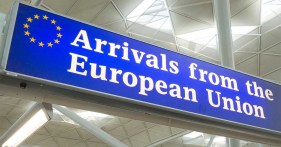 You “should now make arrangements to leave” (Home Office)
“The UK’s University sector is one of our most valuable national assets” Professor Brian Cox, the University of Manchester academic and TV presenter, told me last week. Brian said that UK higher education “is a genuinely global industry generating billions of pounds in export earnings, one of the necessary foundations of our innovation-led economy and perhaps our strongest soft power asset; political and industrial leaders from all over the world were educated here in the UK.”
Which makes it all the more strange why the Government should be, accidentally or deliberately, undermining our Universities. Most of the commentary on Brexit will have on UK Universities has concentrated on issues of funding, research cooperation and students. Much less attention has been paid to what keeps Universities running – academic staff – and what Brexit will mean for the thirty-thousand plus EU academics in the UK. Here are some of their personal experiences and what it means for our Universities.
How this all started for me…. Continue reading “Brexit and EU27 academics in the UK – breaking up is hard to do”
 Colin Talbot - my blog