
The UK after the Referendum: All That Is Solid Melts Into Air…..

The EU referendum result came as a shock to just about everyone, including the leaders of the “Leave” campaign (and me).

The aftershocks of this earthquake in British politics are still being felt.

Three of the central antagonists – the Prime Minister David Cameron, the leader of “Leave” Boris Johnson and leader of UKIP Nigel Farage – have all ‘resigned’. The leader of the Opposition is clinging onto office by his fingernails.

These individual dramas and excitements are, however, mere sideshows.

The real tragedy is the way the British constitution has been turned on its head. Continue reading “The UK after the Referendum: All That Is Solid Melts Into Air…..”

Britain after the EU Referendum: So Who Are ‘We’ Now?

[This is the first in what I hope will be a series of posts on the seismic events triggered by the EU Referendum result. This is my attempt to take a step back and take a broader look at what’s happening.]

The most fundamental question in politics – that comes before “how are we to live together and govern ourselves?” – is “who is the ‘we’ that will live together in this polity?”. 

I do not believe, with Rousseau, that humans were originally noble, isolated, individuals who come together in a ‘social contract’. Nor do I agree with Hobbes that we were likewise isolated, but ignoble, individuals and needed ‘Leviathan’ (government) to force us to live together in some sort of order.

We are a social species – we have always lived together in groups much larger than our immediate family. As Peter Singer so memorably puts it, “we were social before we were human”.

Continue reading “Britain after the EU Referendum: So Who Are ‘We’ Now?”

The Left’s problem with Anti-Semitism

Let’s be very clear – many on the British far-left (and far too many Muslims unfortunately) don’t believe the state of Israel should exist. (See this on the ‘Stop the War’ website as an example.)

They think it is a racist state akin to apartheid South Africa and it needs to be destroyed. They believe the displacement of Palestinians as the state was created is an historic injustice that can only be righted by – one way or another – abolishing the Jewish state.

Ramalah Aug 77

(The picture is me [left] as part of an NUS Executive delegation that visited Israel/Palestine in 1977 – also in the picture are Trevor Phillips and David Aaronovitch)

Continue reading “The Left’s problem with Anti-Semitism”

Dover Harbour – illicit fishing

Time for a confession.

When I was about 10 years old I was already engaged in a risky criminal enterprise.

As you can see from the picture, Dover Harbour is really big. People fished in the harbour, off the beach and from the Harbour walls. But as you can see from this aerial picture there’s a vast expanse in the middle where no-one could fish. Except us. Continue reading “Dover Harbour – illicit fishing”

Did David Cameron Benefit from Tax Avoidance?

CameronThe amount of flim-flam and chaff being thrown about by both supporters and critics of David Cameron over his possible involvements with off-shore tax avoidance activity is quite staggering. Some of the journalists covering it have displayed appalling ignorance. So it might be useful to try and cut through the spin and establish what we do, and don’t, know.
There at least three possible ways Mr. Cameron might have benefitted from tax avoidance that we know of – two indirectly via his father and one directly through his own investment in his father’s off-shore trust. Continue reading “Did David Cameron Benefit from Tax Avoidance?”

£375bn Reasons for George to be Cheerful? Behind the smoke and mirrors of government borrowing.

There is one number virtually no-one* has mentioned in all the coverage of the Budget – £375bn.

£375bn is the amount of government debt (bonds) held by the Bank of England. Part of the reason for Mr Osborne’s perpetual smirk may well have something to do with this £375n number.

These government bonds were purchased – from ‘the market’ and private sector financial institutions – as part of BoE ‘quantitative easing’ program. It was their way of pumping ‘created’ money into the financial system by buying up Government bonds.

(We’ll leave aside the fact that as these bonds may well have been owned outside the UK it meant a lot of the ‘quantitive easing’ went straight out of the country).

At the moment this £375bn represents around a quarter of all Government bonds – or put another way, about 1 in 4 of every pound of the national debt is owned by the Bank of England. Continue reading “£375bn Reasons for George to be Cheerful? Behind the smoke and mirrors of government borrowing.”

The Two Jeremy’s: Hardy, Corbyn and jokes about mental health – why does it matter?

The comedian Jeremy Hardy has been making jokes about the mental health of Kevan Jones, the Labour MP who Ken Livingstone also famously made disparaging comments about in the same vein. Jones has committed the ‘crime’ in their eyes of supporting renewal of Trident. He has also, and very publicly and bravely, said he has had mental health problems.

Livingstone eventually, grudgingly apologized. Hardy on the other hand has refused.

What made Jeremy Hardy’s “jokes” into more of an issue was because they were made as part of his set in the so-called “JC4PM” tour, organized to support Jeremy Corbyn (although apparently without any involvement by the other Jeremy).

When I tweeted about this – and demands Jeremy C disown Jeremy H – a colleague emailed me to ask why I was so down on Corbyn when Cameron regularly says vile things and gets away with it. This did make me think – so here’s an [slightly edited] version of what I wrote back: Continue reading “The Two Jeremy’s: Hardy, Corbyn and jokes about mental health – why does it matter?”

Trident without the Warheads? Not as daft as it sounds, at least in the weird world of ‘resolutionary socialism’

Jeremy Corbyn’s latest suggestion is that, perhaps, we could retain Trident submarines (and the jobs that go with them) but have them without the warheads? This would satisfy both his Trade Union allies and his CND chums.

Like most people my initial reaction was – “what?”

But then I started thinking about it and the following story came to mind, which might help explain this bizarre (by normal standards) idea….. Continue reading “Trident without the Warheads? Not as daft as it sounds, at least in the weird world of ‘resolutionary socialism’”

Is Corbyn turning Labour into a ‘Democratic Centralist’ Party?

And what, exactly, is “democratic centralism” I hear you ask?

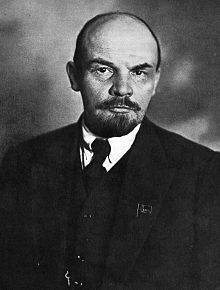
LeninIt is the form of organization pioneered by Lenin and the Bolsheviks and adopted by all communist and Trotskyist organizations ever since.

In this model the political party is not about elections or representation in parliament, although they do that, but about creating a vanguard elite ready to seize power on behalf of the “the masses” when “the time comes”.

Typically a ‘democratic centralist’ party selects its members, who have to go through some sort of probationary period during which they are indoctrinated with the party’s values, ideology and methods before becoming full members.

Once members, individuals get to vote either directly or through delegates on party policy and direction. Often communist and Trotskyist parties have been divided internally into ‘factions’ supporting a particular platform or direction which is presented to the membership. A supposedly free discussion follows before a decision is reached – usually at some sort of congress. That’s the ‘democratic’ bit. Continue reading “Is Corbyn turning Labour into a ‘Democratic Centralist’ Party?”

The Silo in “The Silo Effect”

The Silo Effect – why putting everything in its place isn’t such a bright idea.

Gillian Tett, Little, Brown. 2015 £20.00

41oYBfAOkcL._SX325_BO1,204,203,200_

This is in many ways a good book, especially for people who have never come across or thought about the problems of large hierarchical organizations (private or public) and even for those of us who have.

Tett is an accomplished journalist, US editor of the FT and has a PhD in Anthropology.

Tett begins with three main tales of how ‘silos’ – hierarchical constructed compartments within or between organisations – can cause enormous problems (chapters 2, 3 and 4).

She then moves on to four chapters examining case stories of how silos can be ‘busted’.

All of this is highly entertaining and enlightening – as long as you know nothing about the subject to start with. Then you get really frustrated by Tett’s own personal ‘silos’. Continue reading “The Silo in “The Silo Effect””